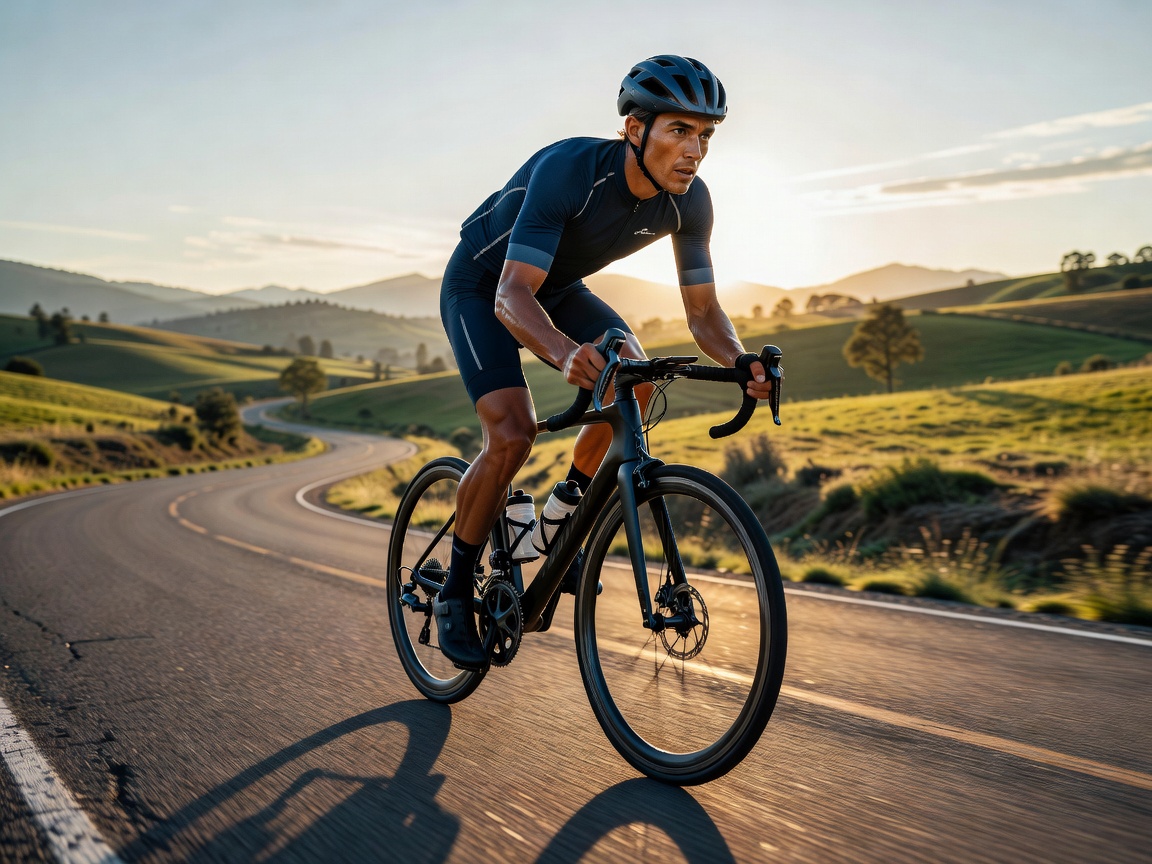
Performance sensors measure or estimate parts of movement. A compact sensor attached to clothing, footwear, equipment or the body can collect information during sport, then pass it to software for processing. The useful detail depends on what the sensor detects, where it sits and what the activity asks it to do.
Inertial measurement in plain language
An inertial measurement unit, or IMU, combines motion-sensing components. An accelerometer responds to changes in acceleration; a gyroscope responds to rotation. Together, those signals can help describe how a device moves through space. They do not, by themselves, explain every aspect of athletic technique, and software may need to interpret the signals using assumptions or models.
A cadence sensor aims to count repeated actions over time, such as steps or pedal rotations. Running dynamics features may present information about a runner’s movement, while cycling sensors can be attached to equipment or worn on the body. A wearable pod may collect motion signals from a particular placement. The exact result depends on the design and processing, so read each manufacturer’s explanation of the measure.
Direct measurement versus estimate
Some sensors directly record a physical signal, such as acceleration or rotation. A displayed metric may be derived from those raw signals rather than measured directly. Software can combine several inputs, apply a model and display an estimate. That distinction matters: the label on a dashboard may look precise even when the device is making an inference about movement.
Camera-based movement analysis offers a different view. Cameras can record movement from an external perspective, while a wearable follows the motion of its own placement point. Each approach has practical limits: cameras depend on viewpoint and setup; wearables depend on placement, signal quality and how the data are processed. Neither automatically captures every detail of an athlete’s movement.
Placement, calibration and repeatability
Placement changes what a sensor can observe. A sensor fixed to a shoe will move differently from one attached near the torso. A loose attachment can introduce extra movement; a secure placement may improve consistency, provided it matches the device instructions. Calibration is the process of setting or adjusting a sensor system so its output is interpreted appropriately. Some products may require setup steps, an activity profile or pairing with compatible equipment.
For comparisons, repeatability is often more useful than a single impressive-looking number. Keep setup and placement consistent when reviewing your own records. Changes in footwear, sensor position, terrain, speed or movement pattern can alter the signal. If the sensor is used in a different activity from the one it was designed for, its output may be less meaningful.
Choosing a sensor for your activity
Start with a specific question. Are you looking for a cadence record, a movement trend or an equipment reading? Then check whether the sensor is designed for that activity, where it must be worn, how it connects and what software displays the resulting data. Compatibility, data access and long-term software support are practical considerations, not fine print to leave until after purchase.
Check the battery and charging routine, cleaning and attachment guidance, environmental limitations and any calibration steps. A sensor that is difficult to attach or pair can make consistent use harder. Features vary between models; do not assume that every sensor labelled for running or cycling measures the same signals or produces comparable metrics.
Good for
Athletes and coaches looking to add a particular movement or cadence signal to their session review, especially when they can repeat the same setup and compare like conditions.
What to know
Wearable sensors observe a limited set of signals from a particular location. Their software may estimate other quantities. They do not automatically assess whole-body technique, explain why movement changed or prescribe a training plan. Treat results as one perspective and seek qualified coaching or professional advice when appropriate.
Worth remembering: more sampling and more graphs don’t remove the need to ask what was actually measured.